Case Study: Driving Enterprise-Wide Leadership Consistency
Assessments International, globally recognized for its iconic 360-degree assessment, partnered with a leading global pharmaceutical firm that manufactures non-branded generic and in-licensed pharmaceutical products. The company employs approximately 10,000 employees around the world with $3 billion in annual revenue, and serves patients across North America, Europe, and the Middle East and North Africa (MENA). With a footprint that spans 29 manufacturing plants, 3 R&D hubs, 13 US FDA-inspected facilities, and 12 EMA-inspected facilities, the company was quickly growing and needed to align their talent strategy across many different cultures, countries, and languages.
The Challenge: Building a Unified Talent Strategy
The last decades saw continued organic growth for the organization as well as growth through a number of acquisitions. The growth resulted in an ever more dispersed company with ongoing integration opportunities and challenges including:
-
Global growth and acquisitions created challenges integrating cultures, talent, and leadership.
-
Multiple competency frameworks made talent assessment, development, and retention inconsistent.
-
A unified talent strategy was needed across cultures, countries, functions, and languages.
The Solution
One area of focus for the company was the development of its leadership. To develop such a large and diverse leadership organization, the company needed to align its competency framework (the competencies/capabilities, and behaviors it expected from its leadership and employees). This would allow leaders across the world to be developed to consistent success factors and standards. Once it aligned its competency framework, the company needed to customize development assessments to give leaders feedback on its success factors and standards.
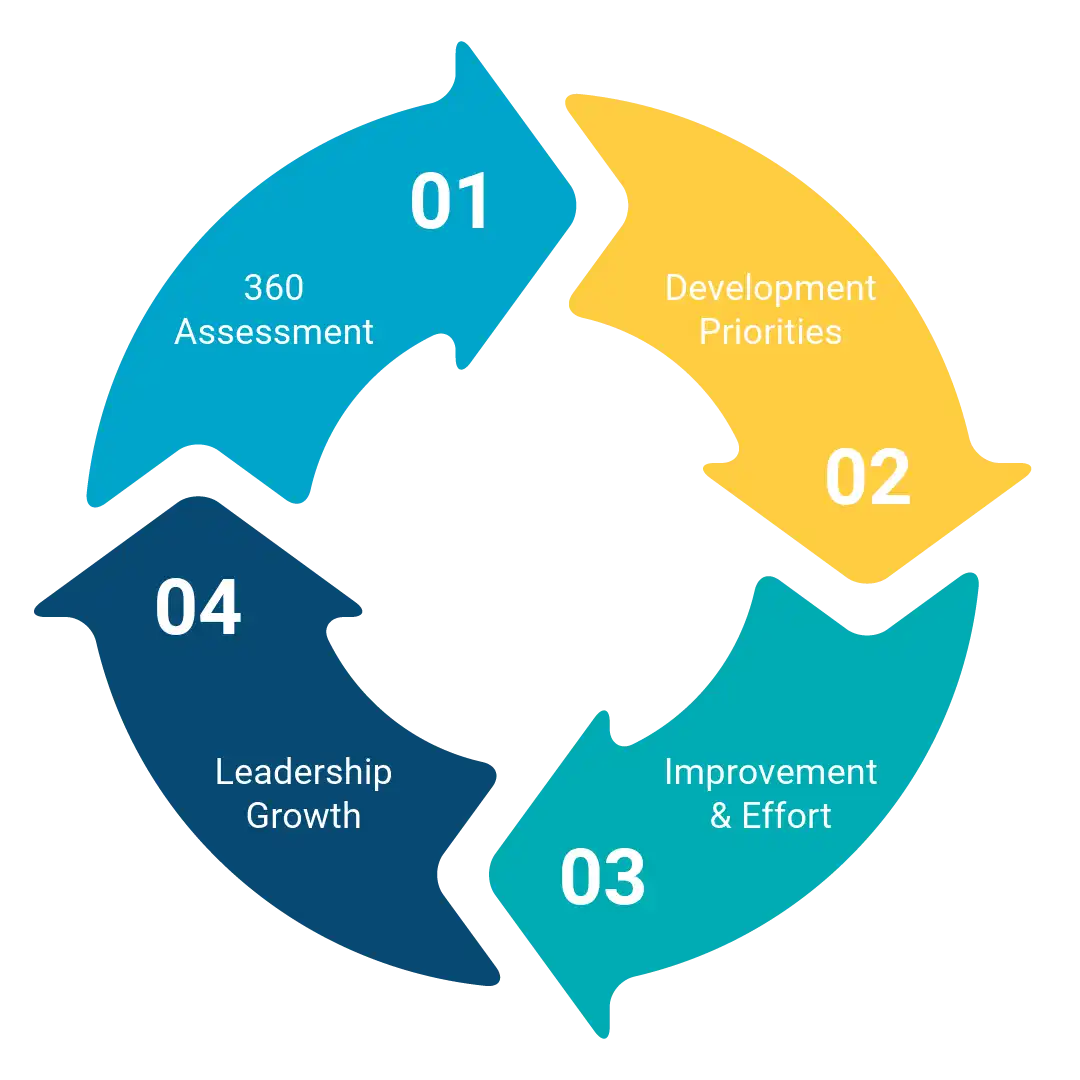
Partnering with Assessments International, Inc., the company deployed a solution with four integrated work-streams:

Leadership Development Outcomes
The solution resulted in a number of Leadership Development outcomes including:
-
Better development conversations: Leaders received clear, multi-perspective feedback that made conversations with managers and coaches more structured, candid, and action oriented.
-
Enterprise consistency: A unified competency language enabled meaningful comparisons across functions and geographies, strengthening succession planning and talent review quality.
-
Higher participation: Mobile-optimized surveys and automated reminders drove participation rates up, improving data reliability at both the individual and group level.
-
Measurable leader growth: Year-over-year tracking gave the organization its first real ability to determine whether leaders were improving as a result of development program participation.
-
HR as a strategic partner: Access to rich analytics elevated HR’s credibility with senior management, positioning the function as a driver of business insight rather than an administrative service.